
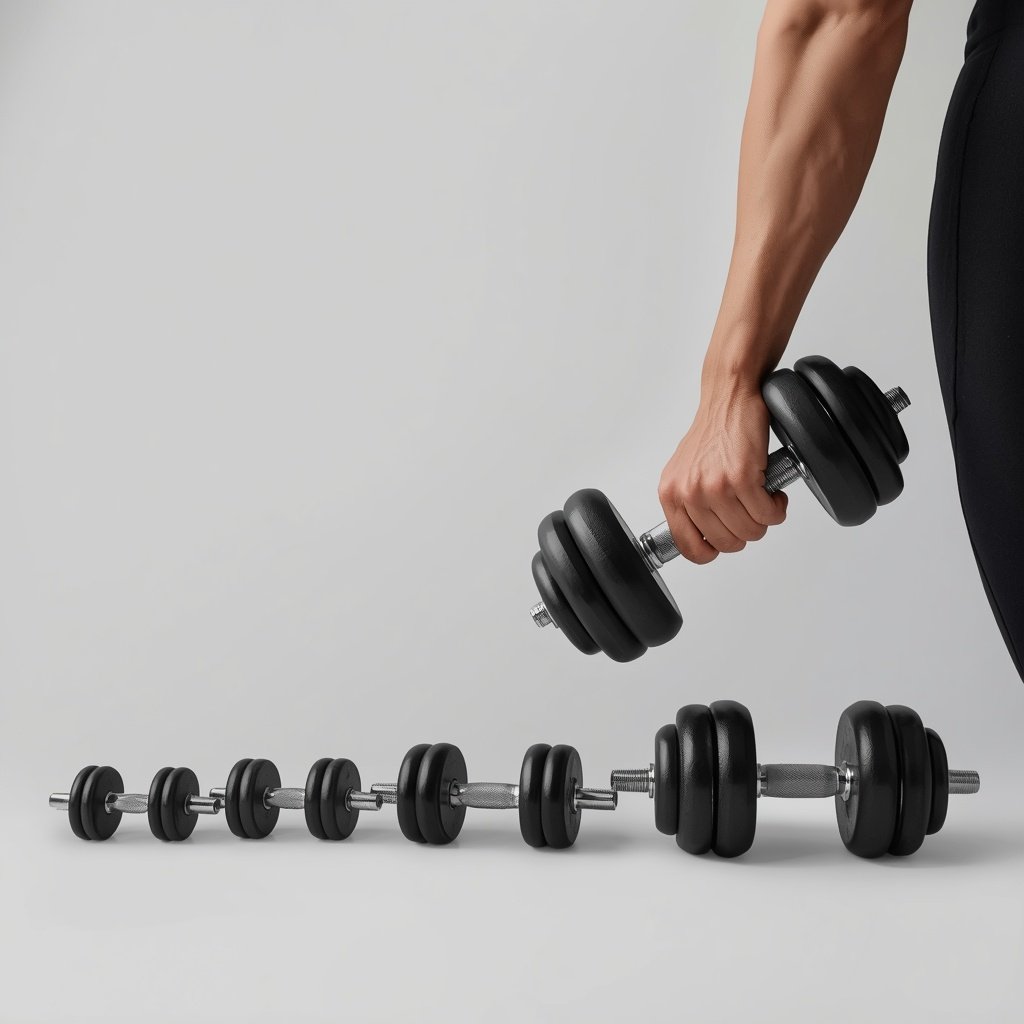
Fitness: Choosing the right dumbbell weight is very important to get the results, from your workout. If the dumbbell weight is too light you may not challenge your muscles enough. On the hand if the dumbbell weight is too heavy you could get hurt or use bad form while you lift.
Selecting the right dumbbell weight can depend on your fitness level, type of exercise you are doing, strength, and the goals which are working around you want.
Whether you are a beginner or an elite lifter, the right weight should allow you to perform each exercise with stability or control. That’s why it is more important to perform to have technique instead of taking the heaviest dumbbell on offer.
Start With Your Fitness Level
Choosing the dumbbell weight should happen after when you check your current fitness level.Starting with a dumbbell is basically best for beginners. That why you learn the form and avoid putting too much strain and energy on muscles and joints.
An entry-level lifter usually starts off using 2 to 5 kg dumbbells for many of the upper body workouts. Because the lower body can take on heavier weight, using a heavy load for those exercises could be appropriate. But, these are only vague initial suggestions. You ought about his own strength consistently.
If you already have some experience, with strength training you might start with a dumbbell.. Remember to increase the weight slowly.
Choose Weight Based on the Exercise
The weight of dumbbells will vary depending on the exercise. A weight that feels light for a biceps curl might be too heavy to do for instance, in the squat or dumbbell row.
Smaller muscle groups often use lighter weights on dumbbells. Extra controlled movements (often lighter weights) which will include lateral and front raises, in addition to biceps curls or triceps extensions.
Heavier dumbbells can be used typically for larger muscle groups. Application for example squats, lunges chest presses deadlifts and rows require additional resistance.
Thus, you should not use the same weight dumbbell for all exercises. Having various dumbbell weights can prove much more functional for an entire workout.
Use the Repetition Test
One straightforward method to pick the dumbbell weight is to do a quick test using repetitions. Pick a weight. Do the number of reps you and sure you use good form.
For strength and fitness goals people usually work in 15 reps. The last few reps should be hard. You still need to keep control and use proper technique.
If the weight is too light you’ll be able to do way reps without really feeling challenged. On the hand if you can’t finish all your planned reps and you’re struggling to move the weight through the full range of motion it’s too heavy.
As your strength grows you can increase the weight in steps. This way you keep getting stronger without overdoing it.
Pay Attention to Your Fitness
Good form always comes before weights. Your body must stay in control for every workout. Do not swing the dumbbells or not do on momentum to lift weights; keep your form. A good way to do the dumbbell curl is to make most of the movement come from the arms not from body. also lift the dumbbells under control when doing a shoulder exercise. decrease the weight when your form starts to break down. It is better to use a dumbbell well than a heavy metal in the wrong way.
Consider Your Workout Goal
The dumbbell weight you select can also depend on your fitness goal. For overall fitness, moderate weights with slower more controlled reps are effective. When you train to gain strength, your program may consist of heavier weights with lower (reps).
Use form that will challenge your muscles without losing correct technique for proper muscle growth On the other hand, a person training for muscular endurance may use lighter weight and do more repetitions.
You need to decide your goal and design the workout according to that, and not chasing after some number you see printed on a dumbell.
Increase Weight Gradually, Fitness
Progress should be slow and steady. When a certain dumbbell weight becomes easy to lift a small change happens.
So if you can do 12 reps of an exercise with form using a 5 kg dumbbell without too much difficulty (just on the edge) then soon your stats will show that it is already easy to move up to a heavier weight such, as a 6 kg dumbbell. It does not have to be a change
Building a slower makes it easier to keep going with your workouts.. You are trying to lift more but just adding weight as a way to increase the load. Keep a technical control over your workouts.
Fitness: Common Mistakes to Avoid
The following are some common errors committed while selecting dumbbell weights. The biggest mistake is choosing a weight based on how much another person can lift. Everyone is not of the same strength and experience.
You have another mistake in increasing the weight very quickly. It takes time for your muscles, joints and connective tissues to adapt.
And, of course, one should not bury discontent with pain. Exercise does bring normal muscle fatigue and possible soreness but acute or unusual pain should not be allowed to persist. When pain does occur then performing the exercises should cease and consideration be given to seeking professional guidance regarding their continued use.
Conclusion
Selecting the dumbbell weight is not difficult. Start with a weight that is stable. Pay attention to how your body reacts on movement. The workout, from your weight should be challenging to make the activity difficult. Not hard that you lose control.
Improvement should happen slowly. You can increase the dumbbell weight as your strength increases. As well you can increase the dumbbell weight as your confidence grows. You can design efficient strength training sessions according to your strength
Frequently Asked Questions
What dumbbell weight should a beginner use?
A beginner should start with a comfortable weight that controls obstructions For many upper-body exercises,2 in 5 kg may be a reasonable starting point, but individual strength is important
If you cannot complete with your planned obstructions, with form the dumbbells are too heavy. more swinging, or loss of control are also signs that the weight should be reduced..
Should I use the same weight for every exercise?
No. Different exercises work with different muscles and do not have same level of obstruction. It is normal to use lighter weights for some movements and heavier weights for others.
How can i increase my dumbbell weight?
There is no timetable Weight can be increased when your current weight feel controlled and your target repetitions can be manage with methods.
Is a dumbbell always better?
No. The best dumbbell weight is that challenges your muscles while allow control movement. Heavier is not better.
Leave a Reply